15 MarLean In and Carry a Big Stick

woman lawyerThis week’s hullabaloo in the world of women’s work is Sheryl Sandberg’s Lean In.  It’s pretty clear to all that progress in that field requires a combination of policy change and women stepping up and giving their all to get into positions where they can further change policy.

Some commenters have objected to Sandberg’s argument because she emphasizes women’s responsibility to stand up for themselves – to play to win in the scene as now set, not wait until the scene changes.  She doesn’t’ focus much on how women have been actively denied opportunities to advance.   She acknowledges that policy has to change too, but she doesn’t stress it.  Fine; end of discussion.

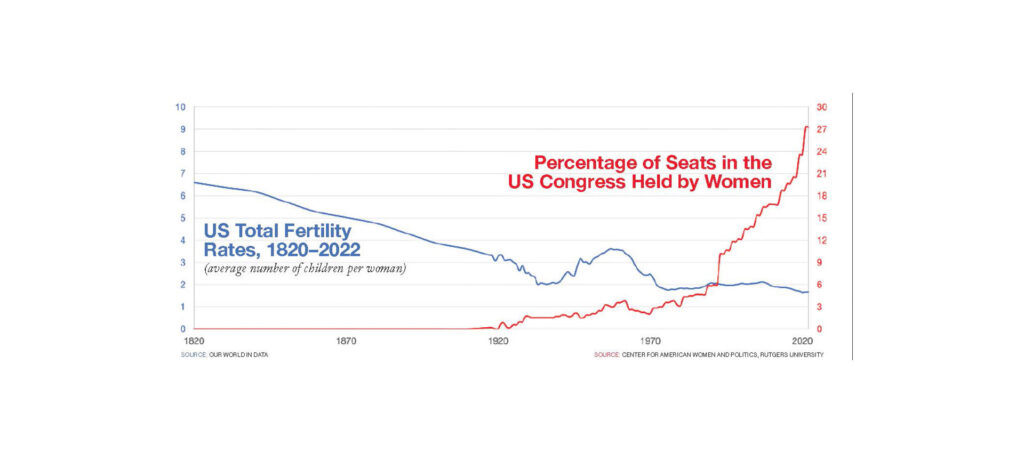
Now back to moving things forward: by speaking up for policy change in business and government (the necessary stick), and keeping on leaning your way up the work ladders (yes, precarious!).  There’s plenty of working women to cover both agendas.  If you haven’t noticed, women are not having a lot of babies and staying home lately —the recession has kept most everybody at work.  Which has a trickle up effect.

So lately, things are moving.  True, the numbers of female CEO’s has only recently risen to 4% after years at 3%, but it is up.  And though the number of female Congress members rose by only 1 in the last election, the makeup of that small number has become markedly more progressive.  But most of all, the discussion is moving. The women in the big positions and down the line are all asking for better, loudly.

The chicken/egg dynamic (which comes first, the policy change that enables women in authority or getting the women into the authority positions where they can make policy change?) may sound like a stalemate, but the two-pronged strategy does make change.  Enough women (like Sandberg, Xerox CEO Ursula Burns, Senator Kirsten Gillibrand, and Houston Mayor Annise Parker, to name a very few) have advanced into leadership positions, and women overall have become enough of an educated and angry voting block, that old sexist ways are suddenly open to critique.  The biased decisions of military commanders on rape cases are suddenly being questioned in the Senate.  Equal pay and a national childcare system can suddenly be mentioned by the President as real goals instead of the “unrealistic” political unmentionables they’ve been for so long.

Helpfully, the anti-femme forces are upset enough about change that they are pushing back, with attempts to deny women basic services like health care and family planning.  And their pushback just makes the women madder – ensuring that the change will come faster and faster now.

As a woman with megaphone, Sandberg can urge women to try harder, within a framework that acknowledges that she’s an exception, as well as a model, and a potential change implementer.  She can make policy changes too—and offer the floor to other women with policy change ideas as well.  There are plenty.

Share

14 FebObama Leads on Universal Preschool


President Obama delivers the 2013 State of the Union Address.In his 2013 State of the Union speech on Tuesday, President Obama called for Universal Preschool to level the educational playing field and ready all citizens for the jobs of tomorrow.  Today more details on how such a program would work and be funded emerged.  New York Times.  More.

The president’s plan would provide federal matching dollars to states to provide public preschool slots for four-years olds whose families earn up to 200 percent of the poverty level. President Obama would also allocate extra funds for states to expand public pre-kindergarten slots for middle-class families, who could pay on a sliding scale of tuition.

 This would be a good start!  Such programs also lead to more good jobs in the short term (since paying teachers well is the way to attract those with solid credentials and to ensure that they stick around long term).  They cost money, but they also work as a stimulus by putting that money into the hands of people who will spend it fast.  What goes around comes around.  Next step–universal childcare!
Here’s an earlier post on that topic:  Childcare as Infrastructure


Share

31 DecAging Sperm? Not the End of the World

sperm in motionWhile female infertility is old news (literally), issues with male fertility create a new cultural frisson.

[This piece first appeared on RH Reality Check and later on Huffington Post]

Aging Sperm? Not the End of the World

Judith Shulevitz’s recent New Republic essay on how later parenthood is “upending American society” claims that delaying kids could lead us down a rabbit hole of genetic decline. The piece gathers much of its energy from new studies suggesting that male sperm quality decays with age.

While female infertility is old news (literally), issues with male fertility create a new cultural frisson. Apparently, genetic errors may be introduced into sperm every time they divide—which is often.* So the children of some older men may have issues, cognitive and physical, that the kids of younger men don’t generally face (at least not due to their dad’s contribution to their DNA).

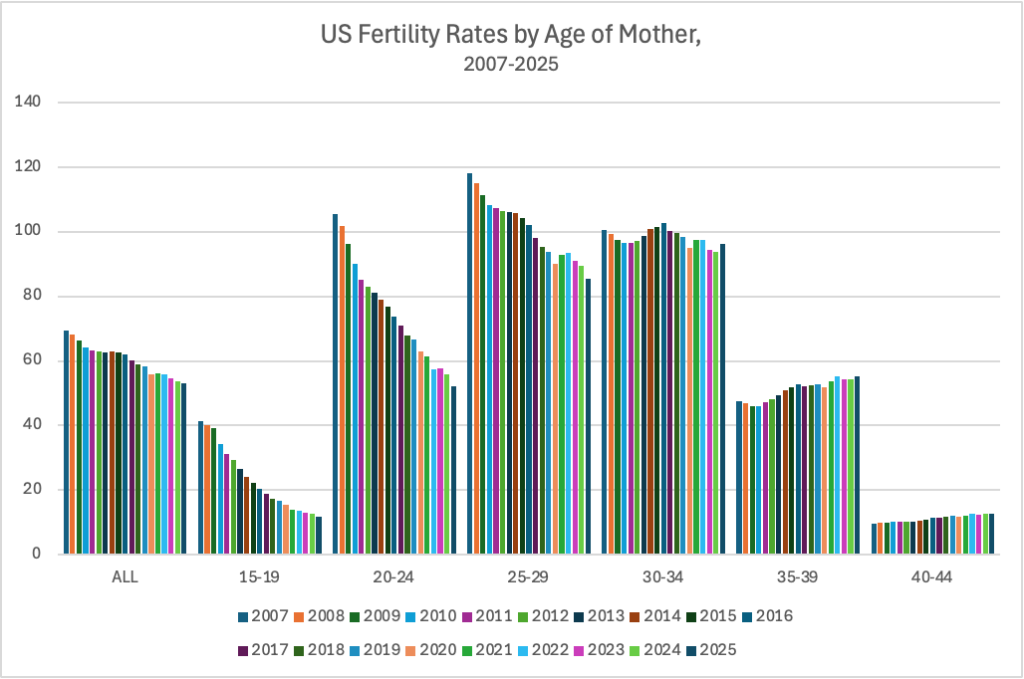
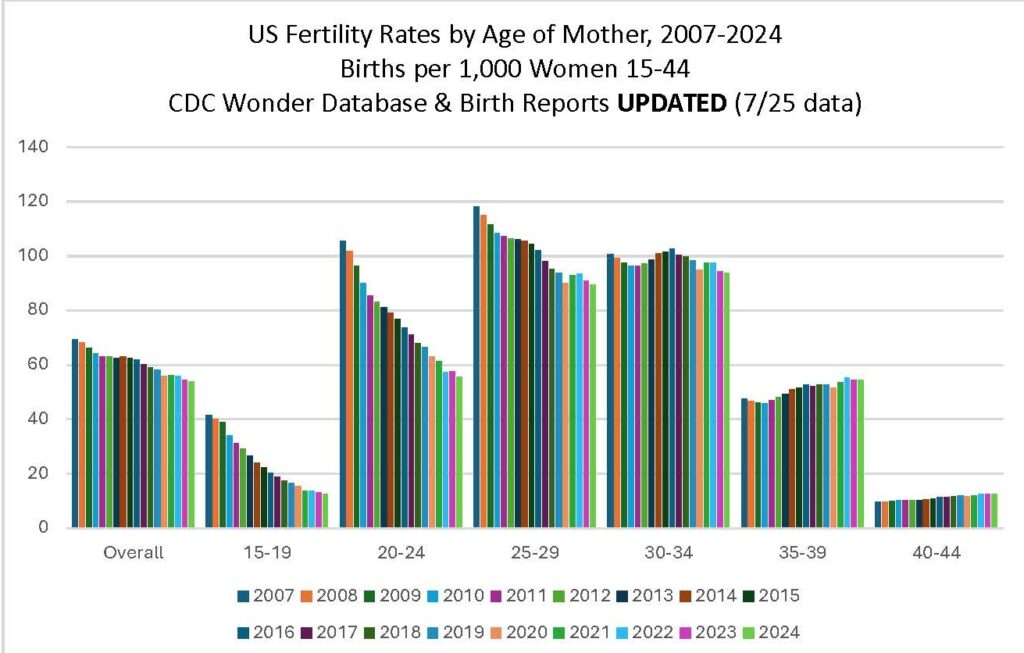
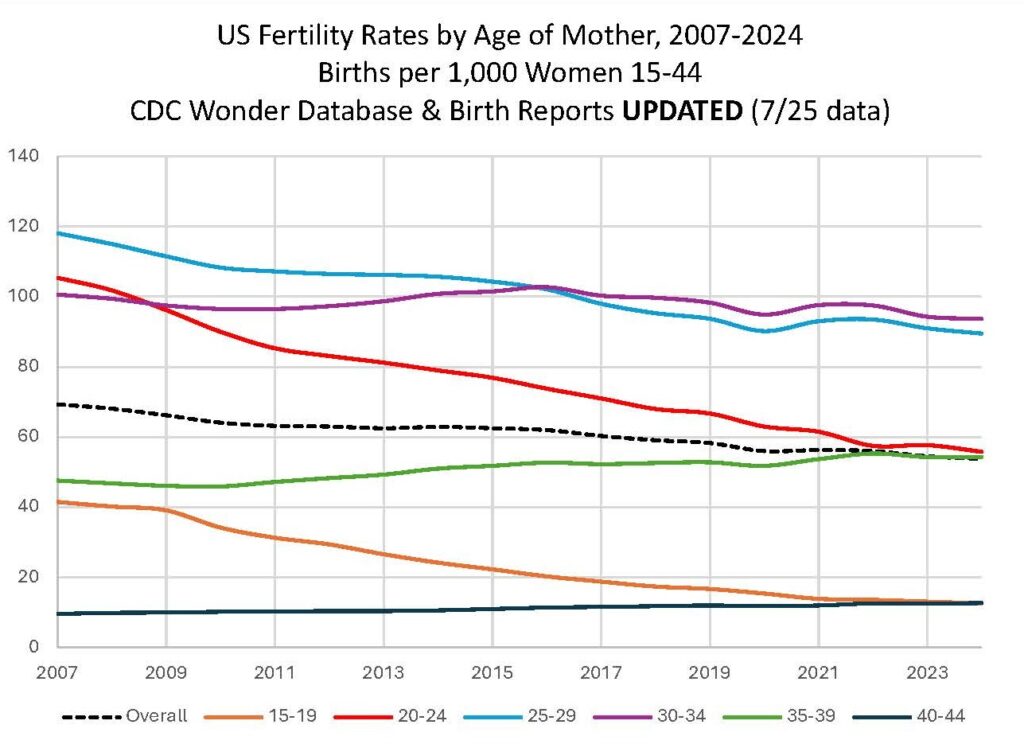
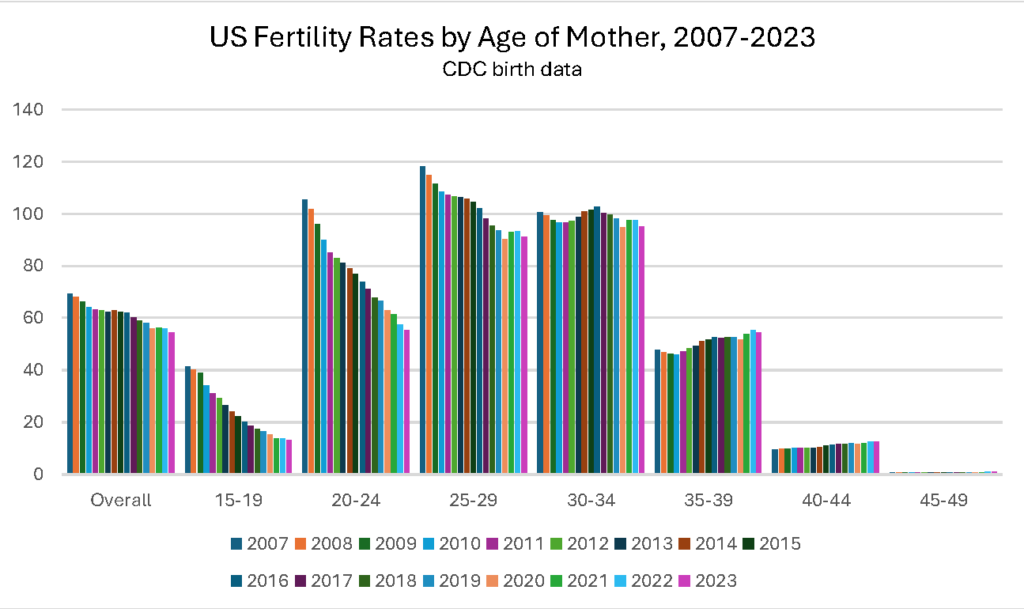
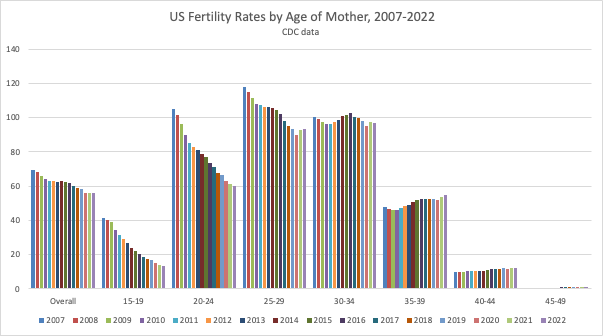
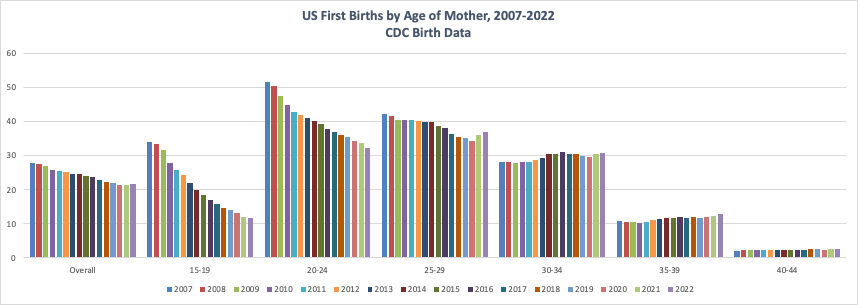
There’s a lot of emphasis on the word “may” in the New Republic piece—since most of the evidence it’s based on is inconclusive. And there’s a strong element of anecdote as well. Fertility catastrophizing is an ongoing sport. For instance, here are some other fertility scaremongering pieces of the past few years which turned out to be not the big problems the headlines suggested: the ovarian reserve scare; the later-parenthood autism scare; the childlessness scare; earlier this month we had the low-birth-rate scare (which turns out to really be about young women delaying kids in order to establish themselves—a time-lag effect).

In the case of new dads over 50, several studies do suggest that their kids may have a higher rate of schizophrenia (about 1 percent) than those of younger dads (about 0.25 percent), and there may be links to other ailments. Time, and more completed studies, will tell. The same is true of studies of the effects of fertility treatments like Clomid on both kids and moms, which the essay also raises as potentially devolutionary. The data is still in the gathering stages.

As there has been all along, there’s reason to ask women and their doctors to think through their fertility options before turning to fertility tech and drugs. Firm data on rates of pregnancy in the late thirties and early forties is scarce, because doctors can’t mandate that a big group of people have unprotected sex constantly for the sake of an experiment. But one study indicates that most women not already known to have an endocrinal disorder or blockage will get pregnant without aid in their late thirties within two years. Many find two years too long a wait before seeking fertility boosters—and certainly it’s reasonable for women to get their hardware checked out early on in their fertility efforts, or even before they’re ready to start trying for kids. But of the 580,000 kids born in 2010 to women over age 35, only about 5 percent of them involved IVF.* (We can’t track how many involved Clomid or IUI.) For more on rates of decline click here.

Fertility treatments should be more regulated and tracked than they are. We know little about the long-term effects of the treatments we’re using on a wide scale. But the presentation of data in this essay is questionable. Potential problems should be noted and discussed, but there’s no basis for jumping to end-of-the-world conclusions. We are not falling off a fertility cliff.

Looking at the same question from the positive side, at least such hand wringing does open up discussion of these issues. Suggestions of declining quality of sperm among later dads shares out some of the weight that’s been jammed on the shoulders of later moms in our fertility discourse.

Different from older moms’ situation, however, these male fertility issues can be addressed with relative ease. For women, IVF and egg donation involve injections of high doses of hormones with unknown long-term effects, huge expense for each attempt, and ethical questions over the use of poorer women’s genetic material for the benefit of richer couples.

By comparison, for men worried about potential issues with their aging reproductive materials, arranging for sperm donation is a breeze. The cost is negligible and no risky hormone injections are required. If you want familial DNA connections, there’s the real option for many of using a nephew’s sperm—or that of a younger brother. Or if you don’t have such a handy relative, or it’s not a real option given your family dynamic but you do hope to propagate your own DNA—you can push for further research around generation of new sperm cells from an individual’s adult stem cells, skin cells or other tissue. If perfected, such advances could allow men (and, interestingly, women too!) to generate new sperm cells bearing their DNA. These would be free of the genetic errors that older sperm have, because they haven’t divided as often. Some animal experiments along these lines have been successful.

The understanding that spermatic dynamism fades with time may surprise us for a few minutes. But viewed in wider context, it’s not the end of the world, guys.

Modern fertility is changing at lightning speed, and along with it the stratification of tasks based on gender. Many of our old-world assumptions are being upended. But for women, men, families, and society, the new options introduced by control of fertility are largely positive and open the way to ongoing positive cultural evolution.

*More specifically, the sperm themselves do not divide – it’s the cells in the gonads that generate the sperm that divide, creating the possibility for potential genetic errors.

**5% is correct. The rate was listed as 6% in an earlier posting.

Share

22 DecDelayed Parenting Upends Society – Positively

121107_heitkamp_baldwin_hirono_ap_60

This past week I participated in two radio panels with Judith Schulevitz, whose recent New Republic essay spawned a lot of media response.  I have to say I’m getting less and less impressed with the world of media response–since it feeds us, and blows itself up with, similar catastrophe narratives around women’s control of our fertility practically every month, never noticing that there’s a pattern there. Over and over the stories turn out to be half truths or completely pointless, but they put the new ones out anyway.

I just posted a piece on RH Reality Check around one dynamic of Shulevitz’s piece (its big concern about the possibility that some older dads’ sperm may be suboptimal) relative to the ease of addressing that concern, should it prove to be a major issue (the science jury is still out on that, as it is on practically all of Shulevitz’s concerns). Not to say they shouldn’t be discussed – they should be, so that’s the positive side of the dynamic.  But no need to jump to end of the world conclusions. Will repost it here tomorrow.

KQED’s panel also included Joan Williams, and WBUR’s On Point panel also included Nona Willis Aronowitz.

Schulevitz argues that later parenthood upends American society in negative ways, to do with possible genetic problems introduced by unregulated fertility treatments and the genetic errors that build up in the sperm of older dads over decades.  Down the line the children of older parents will be a lesser race, due to genetic problems introduced by delay, she suggests.  And the kids will lose their parents too soon (mid 30s to mid 40s)–especially problematic for adult kids with major ailments.

I of course agree that later parenthood upends things, but I see it as an overwhelmingly positive phenomenon in terms of the social dynamics of women’s participation in public life and in policy making that delay allows.  And it’s only because women have delayed kids or refrained from having them at all that we now have even a discussion of the possibility of a family friendly workplace — the condition that would allow women to delay less long.  Only because women have delayed is there the chance that later they won’t have to.  How much later we have to wait is in large part up to us at this point.  When does the group throw the TV (or the inequity) out the window and start yelling?

In the meantime, delay has been our form of silent protest of the status quo. Women have figured out that delaying their first child in order to finish their educations and to establish at work means that they make enormously more in salaries over the long term (12% annual gain in life time earnings per year of delay for college graduate women!).  This money and education then translate into expanded political and social influence that they would not get any other way.  It’s millions of women’s delay of family by a little or a lot that has brought us to the point where our issues are now at least being discussed in the public forum.  Not so much acted upon yet, and not always discussed very thoroughly (every time we bring up a national childcare system in a discussion people’s eyes glaze over and we’re told there’s no chance so why bother to discuss it).  But at least there’s a vocabulary of family friendliness now.  Baby steps, as it were.

Other benefits women have found in later motherhood (a quick recap of READY‘s findings ):

  1. stronger family focus (because they’ve been out, and now they want to be at home)
  2. more clout in the workplace – to command a family friendly schedule for oneself, and to change policy for the group
  3. higher salaries (see above)
  4. rising class (delay can be a class elevator: women born into lower class families who are able to delay and invest in their educations, often themselves give birth to middle class kids)
  5. more likely to be married or partnered (that’s true for women 30 and over: in 2009 11 percent of first-time moms at 18 were wed, 30 percent at 21, 62 percent at 25, 83 percent at 30, 84 percent at 34 (the high), 78 percent at 40, 77 percent at 45-55)
  6. single moms who give birth or adopt later are generally more financially stable than their younger counterparts
  7. younger husbands (80% of women who married in their 20s married older men, where only 60% of women who married at or after 35 did so)
  8. peer marriages (marked by equal power, based on similar educations and earning ability, greater likelihood of shared childrearing and housework, and shared interests )
  9. greater self-confidence in making one’s points and advocating for one’s kids and other concerns
  10. longer lives (yes, it’s true – linked to higher wages and better medical care, as well as better education – and also, it seems, to having more reason to live longer and take care of oneself),
  11. greater longterm happiness and life satisfaction (see Myrskyla & Margolis, Happiness Before and After Kids)
  12. greater participation as citizens in the shaping of government, business and social policy to reflect the interests and concerns of 51% of the population and their families (like pay equity, fair education for citizens of all ages [infancy through college], end to violence against women and children, responsible environmental policy, and so on).

In my view, these effects are hugely more important than the possibility that some later dads in their 50s may be at risk for having kids with genetic problems (about 1%, up from 0.25% in their 20s), especially since this possibility now that it’s being identified can be addressed at low cost and limited trouble by sperm donation, either from a sperm bank, or if you’re concerned about perpetuating your DNA, then from a younger relative, or even potentially soon from other of your body’s cells that can be made to generate new, error-free sperm.

I think these issues also outweigh even the risk that the grandparents of the kids of delayed parents will be less energetic (another topic of Shulevitz’s emphasis), though there’s plenty of room for moving to address such concerns of families around too much delay by fixing the policy around women’s work in the USA.  Activism, ladies, activism.  History suggests that nobody else will do it for us.

Just saying.

Share

21 Dec“Delaying Childbirth Could Reduce Risk of Triple-Negative Breast Cancer”

Interesting new data on the protective effects that delaying childbirth into at least your late 20s and breastfeeding have against triple-negative breast cancer.  Click here for the full story.

“The study shows those women whose first childbirth is delayed by at least 15 years after first menstrual period, age at first childbirth, and breastfeeding were all inversely associated with risk of triple-negative breast cancer.”

Share